

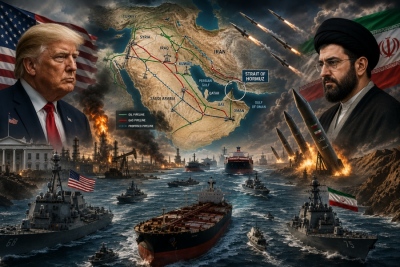
Rapid developments unfold on the Middle East front, as Donald Trump appears to prioritize opening the Strait of Hormuz and ordered a freeze on attacks according to US media, opening a window for a diplomatic agreement.
Iran announced that it is suspending military attacks against Persian Gulf states and US interests in the region, following the pause of US bombings for a second consecutive night.
According to news agency AFP, Iranian military spokesman Mohammad Akraminia stated that Tehran's strategy was from the beginning retaliatory.
"Our strategy was essentially a strategy of retaliation and, as attacks against us stopped, we have also suspended our retaliatory operations," he noted.
The announcement comes after nearly two weeks of reignited conflicts between Iran and the United States, centered on control of the Strait of Hormuz.
The Trump decision to suspend attacks was reportedly taken due to concerns that such a conflict could "dangerously weaken" the ammunition stockpiles of United States air defense systems, at a time when Iran claims that the Americans are in a chaotic and unfavorable state.
At the same time, according to Iranian media, an initiative for the restarting of negotiations is unfolding, as it appears under US inspiration, with an eye on energy markets.
Negotiations between Oman and Iran over Hormuz intensify
At the center of diplomatic developments are contacts between Iran and Oman regarding navigation safety in the Strait of Hormuz, through which, under normal conditions, approximately 20% of global seaborne oil trade passes, as well as significant quantities of liquefied natural gas, minerals, and fertilizers.
Spokesman for the Iranian Ministry of Foreign Affairs Esmail Baghaei announced that consecutive meetings were held in Tehran with the Deputy Foreign Minister of Oman on Friday and Saturday (25/7).
According to him, the two sides exchanged views on the basic principles and operational mechanisms that could ensure the safe passage of commercial vessels through the Strait.
Esmail Baghaei characterized the talks as constructive, pointing out that progress was achieved, while technical and political consultations continue. At the same time he emphasized that, so far, there has been no change in ship traffic through Hormuz.
Official Iranian agency IRNA reported that the talks aim to formulate a joint navigation management framework, reiterating Tehran's position that the security of the strategic passage constitutes a shared responsibility of Iran and Oman, as the two states controlling its shores.
The initiative of Pakistan and Qatar for a return to negotiations
According to Iranian media, Pakistan and Qatar have undertaken a joint mediation initiative, seeking to create the conditions for ending the conflict and restarting negotiations between Washington and Tehran.
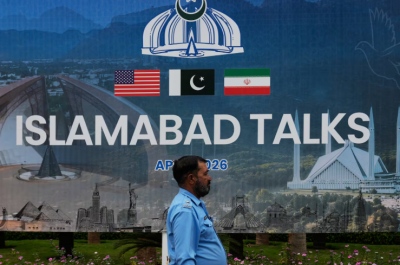
According to well-informed sources, Islamabad and Doha submitted a joint de-escalation proposal last week, which foresees as a first step the return of both the United States and Iran to the positions they held before July 9, when the new cycle of hostilities began.
This proposal is considered a transitional stage that could permit the resumption of negotiations aiming at a permanent political settlement of the crisis.
Although the same sources did not disclose details regarding official responses from the two sides, they claimed that both Washington and Tehran appear disposed to return to the path of dialogue and diplomacy, provided the de-escalation of military operations is maintained.
President of the United States Donald Trump appears to choose, at least temporarily, the diplomatic route toward Iran, granting time to ongoing indirect negotiations mediated by Oman.
US Ambassador to the United Nations Mike Waltz stated to television network Fox News (26/7) that the American president is allowing talks to evolve before new military decisions are taken.
"The president is giving the talks a little space. He is giving them a little time to evolve," Mike Waltz characteristically stated.
With an eye on energy markets
Developments acquire particular significance as energy markets remain especially sensitive.
The rise of Brent prices above 100 dollars per barrel and the increase in fuel prices in the United States reinforce pressure on Washington to seek a diplomatic solution. Head of Global Commodities Research and Strategy at JPMorgan Natasha Kaneva estimates that maintaining prices at such high levels increases incentives for the resumption of substantive negotiations.
At the same time, Tehran maintains harsh rhetoric. Iranian military spokesman Mohammad Akraminia warned that any new US airstrike will lead to further geographic expansion of the conflict.
"I believe that if the Americans are misled again by the deception of the Zionists and insist on continuing the war, particularly through airstrikes, then the conflict will expand geographically even further," he stated.
Mohammad Akraminia also claimed that the field of operations now extends from US bases in Jordan to Persian Gulf countries, while mentioning that tension has already transferred to the region of the Bab al-Mandeb strait, in the Red Sea, referring to recent Houthi attacks against tankers.
These warnings coincide with a report by British agency United Kingdom Maritime Trade Operations (UKMTO), according to which a tanker in the southern Red Sea reported an impact from an unknown projectile at a short distance from the vessel, without further details becoming known so far.
Pressures intensify from Houthi blockade of Bab al-Mandeb strait
At the same time, anxiety peaks globally over developments in the Middle East as the ongoing closure of the Strait of Hormuz in combination with the Houthi blockade of the Bab al-Mandeb strait threatens to explode inflationary pressures in the global economy.
Suffocating pressures mount on the US government to proceed with a difficult admission: that Iran now exercises critical control over the strait, which it will not abandon and constitutes the most critical security factor for the region of the Persian Gulf.
In this context, a proposed agreement has been submitted to the United States and Iran by mediators, aiming at de-escalating tension in the Persian Gulf and restoring navigation in the region.
The American initiative comes at a time when Washington is seeking a diplomatic exit, following days of escalating military exchanges and heightened tension in the broader region.
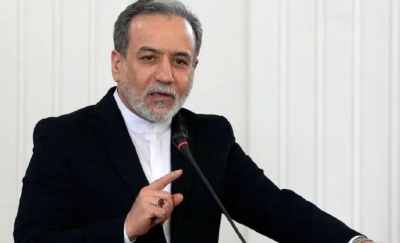
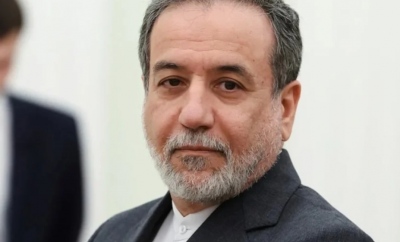
At the same time, Minister of Foreign Affairs of Iran Abbas Araghchi stated that responsibility for designating maritime corridors in the Strait of Hormuz belongs to Tehran, emphasizing alongside that security in the region cannot rely on the presence of external forces, but must be the result of cooperation among regional states.
The plan foresees lifting the naval blockade on Iranian ports, resuming navigation through the Strait of Hormuz, as well as providing "security benefits" to Tehran from the passage of commercial vessels.
The proposal is reportedly part of a broader diplomatic initiative for normalizing relations between Washington and Tehran, following the recent period of military tension in the region.
US bases in Jordan, Kuwait, and Bahrain targeted
Spokesman for the Army of the Islamic Republic of Iran Mohammad Reza Akraminia stated earlier that Tehran placed US bases in Jordan, Kuwait, and Bahrain at the center of its military operations, characterizing them as among the most important military installations of the United States in the region.
According to him, Iran proceeded with these actions in order to "defend its rights" in the Strait of Hormuz, claiming that the United States violated their commitments and attempted to create an "illegal and virtual maritime corridor" in violation of the Memorandum of Understanding signed in June.

US failed to achieve its goals
In separate statements, Iranian military spokesman Abolfazl Shekarchi claimed that the United States failed both to impose their goals in the Strait of Hormuz and to weaken Iran.
As he noted, "the situation is chaotic and unfavorable for America," adding that Washington is now seeking a new strategy.
Iran locks absolute sovereignty in Hormuz by law, IRGC fires on 6 tankers
Iran proceeds with a move carrying immense geopolitical ramifications, as Parliament considers a bill that aspires to institutionally establish Tehran's sovereignty over the strategically important Strait of Hormuz.
The new legislation is expected to grant the Iranian side even greater control over one of the planet's most crucial maritime corridors, through which approximately one fifth of global oil trade passes, intensifying confrontation with the United States and their allies.
Establishes sovereignty
State television IRIB reported that the National Security Committee of the Iranian Parliament is considering a bill for managing the Strait of Hormuz, in cooperation with judicial, economic, and political subcommittees.
Tehran has not published the full contents of the bill.
However, Iranian officials have reported that its goal is to establish the country's sovereignty over the strategic maritime passage, as well as to impose fees on ships passing through the Strait.
In May, Vice President of the Iranian Parliament Ali Nikzad stated that the plan foresees that Israeli vessels "will never be allowed to pass through the Strait of Hormuz," while ships from "hostile countries" will not receive transit permission unless they previously compensate Iran for damages that, according to the Iranian side, were caused by the war.
Revolutionary Guards fired warning shots at six ships
Meanwhile, a new episode of tension occurred in the Strait, as the Revolutionary Guards (IRGC) opened warning fire against six ships that attempted to pass through the strategic maritime passage, reinforcing concerns of further escalation in the region.
According to Iranian state television, the ships were prevented from continuing their course, as they were moving outside the "approved route" which, as Tehran claims, has been set for passage through the Strait of Hormuz.
Second incident within a few hours
The new incident comes just one day after the interception of another four ships, which, according to the Revolutionary Guards, attempted to pass through the Strait without the required authorization.
Iranian authorities claim that these moves are part of enforcing new maritime traffic management rules in the region.

Terror in Hormuz: Explosion on tanker after striking sea mine
An oil tanker exploded after reportedly striking a sea mine in the strategic Strait of Hormuz.
According to news agency Tasnim, the tanker struck the mine after leaving the Tehran-approved shipping route used for ship transit through this critical maritime passage.
So far, Iranian authorities have not issued an official statement regarding the incident.
Araghchi: Reopening of the Strait depends on Tehran, security of the region will be collective
In an interview, Abbas Araghchi noted that "there is no ambiguity in Article 5 of the Memorandum of Understanding," which foresees that Iran will take necessary initiatives for reopening the Strait of Hormuz within a period of one month.
As he explained, the agreement assigns Tehran the responsibility for designating maritime corridors and ship passage terms, so that navigation returns to levels that prevailed before the war.
He added further that any decision to create a new maritime corridor or abolish an existing one should be taken in consultation with Iran and according to the provisions of Article 5.
We harbor no hostility toward countries of the region
The Iranian Foreign Minister claimed that the maritime corridor proposed by Tehran was selected exclusively with navigation safety in mind, as mined zones existed in certain areas.
He also accused US forces of guiding commercial ships away from the route defined by Iran, encouraging them to use an alternative passage through the Strait of Hormuz.
Referring to Iran's relations with neighboring countries, Araghchi stated that Tehran maintains continuous communication with states of the region and reiterated that "we harbor no hostility toward them."
Alongside, he claimed that a common understanding exists among regional states that Iran's actions are not directed against neighboring countries, but aim to protect its national interests.
"US bases constitute a factor of instability"
Abbas Araghchi further claimed that the perception is strengthening that Middle East security must be ensured by the countries of the region themselves and not through dependence on external forces.
As he said, several states have begun to realize that the presence of US military bases in the region has evolved, in certain cases, into a factor threatening their own security.
The Iranian minister concluded by saying that Tehran's continuous contacts with countries of the region as well as other states prove a willingness for dialogue, noting that mutual criticisms between sides are normal within the framework of international relations.
Iran denies return to Memorandum
The United States, according to Iranian sources, have reportedly submitted a ceasefire proposal to the Islamic Republic of Iran, seeking parallel return to the previous Memorandum of Understanding.
The same information reports that upcoming talks are expected to expand to developments in Yemen, incorporating the issue into a broader framework of regional de-escalation.
Nevertheless, sources estimate that Tehran will hardly accept the latest American proposal.
According to the same information, the Iranian side continues to appear reluctant to return to the negotiating table under current conditions, a fact that maintains uncertain prospects for an immediate de-escalation of the crisis.
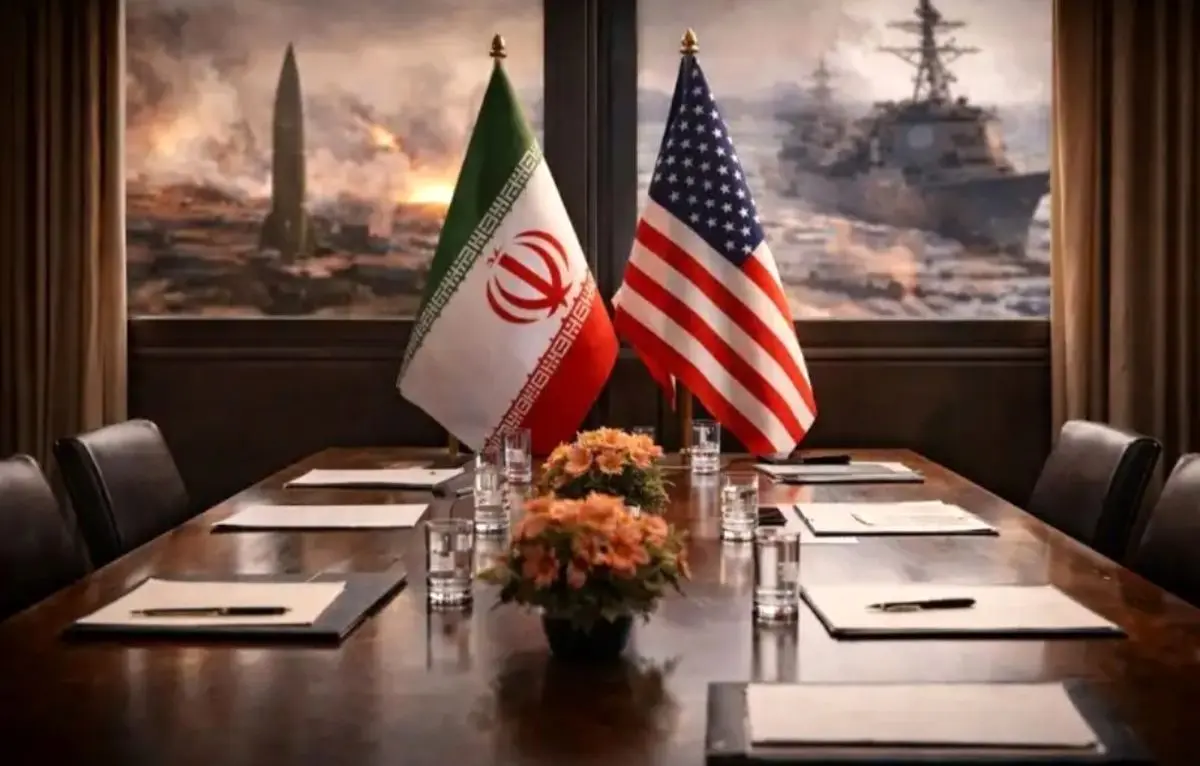
Although further details regarding agreement contents have not been published, Iranian media report that reopening the Strait of Hormuz is linked to specific security arrangements and commitments from both sides.
The Strait of Hormuz constitutes one of the world's most important maritime transport corridors for oil and liquefied natural gas (LNG), as approximately one fifth of global oil trade passes through it.
A potential agreement on normalizing navigation is estimated to be able to reduce geopolitical risks and contribute to stabilizing international energy markets.
So far there is no official confirmation from the US or Iranian government regarding acceptance or progress of negotiations for this specific plan.

Iran distances itself from rumors
As speculation intensifies over the possibility of direct military conflict, conflicting information has seen the light of publicity regarding security assessments and diplomatic initiatives on the table, which Iran denies, according to news website khabarfoori.
The news reported by Israeli media that Donald Trump decided to postpone a military strike and prioritize diplomacy, claims of a new mediators' proposal to Iran and the United States that reportedly foresaw lifting the port blockade and collecting tolls at the Strait of Hormuz, are characterized as unfounded and have been denied.
As speculation intensifies over the possibility of direct military conflict, conflicting information has seen the light of publicity regarding security assessments and diplomatic initiatives on the table.
Newspaper Yedioth Ahronoth reported that, after initial assessments that the United States were about to launch a massive attack against Iran during the night, a fact that led to an increase in alert level, Israeli officials ultimately concluded that Trump decided to postpone the operation.
According to the report, the goal of the American president is to grant Tehran more time and margin for a diplomatic response. Nevertheless, Israeli officials continue to claim that no realistic prospect of reaching a definitive agreement is visible.
At the same time, posts on social media, citing website Axios, claimed that mediators had submitted a new proposal, which foresaw lifting the blockade on Iranian ports, reopening navigation in the Strait of Hormuz, and granting Tehran "security benefits" from ship transits.
However, this information does not correspond to reality, according to Iranian sources.
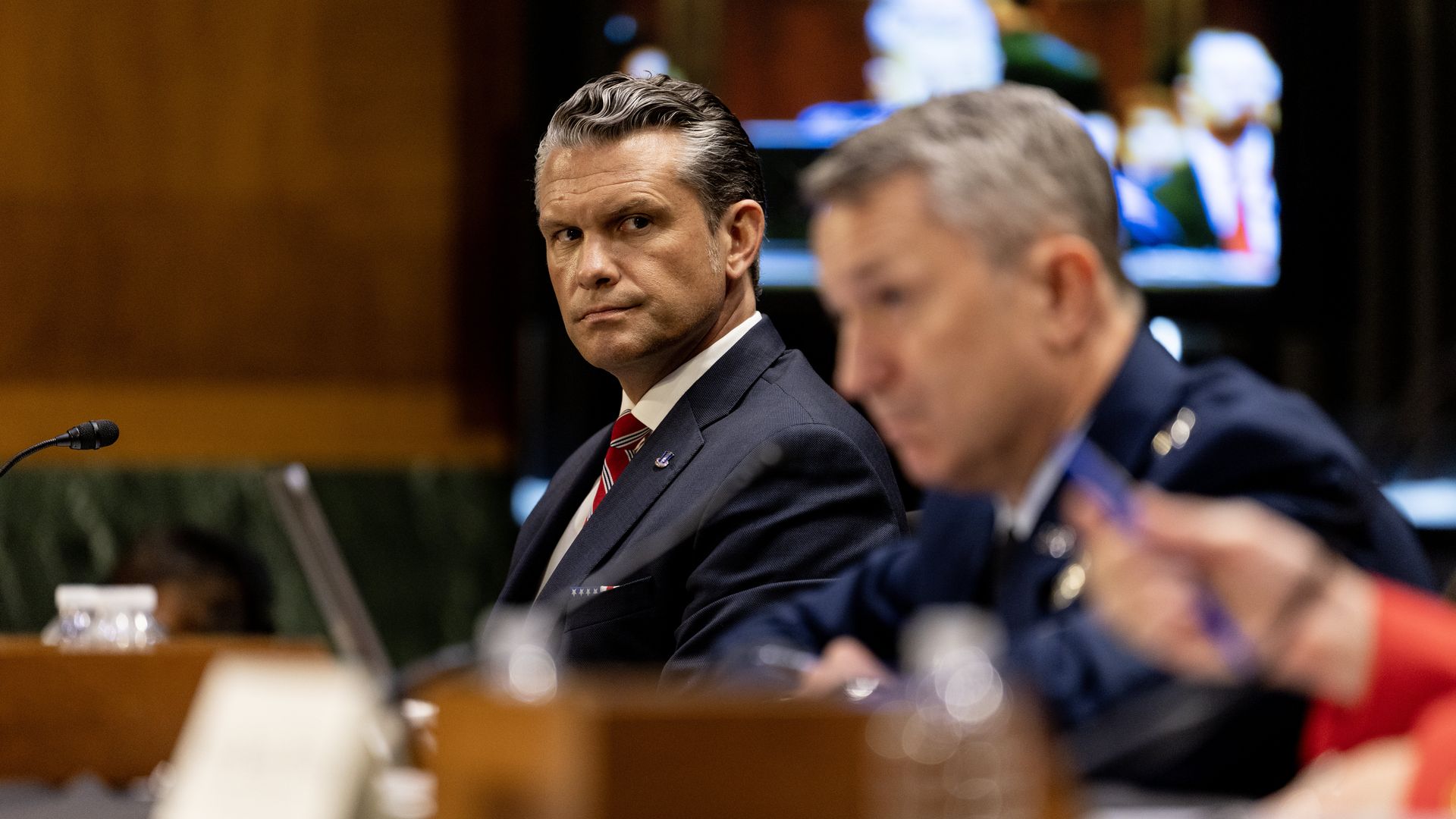
Hell from IRGC: Over 200 US soldiers dead in operation Nasr-2
Spokesman for the Islamic Revolutionary Guard Corps (IRGC) Hossein Mohebi claimed that the number of US soldiers killed after what he described as a violation of the Islamabad Memorandum by the United States has exceeded 200.
US figures are false
Hossein Mohebi stated that figures released to publicity by US authorities regarding human casualties are "blatantly false."
According to his claims, American dead in operation "Nasr-2" exceed 200, while the number of injured is "much larger."
The IRGC spokesman also noted that, during attacks against US targets, the Revolutionary Guards struck eight deployment centers of US troops.
He added further that, in a single attack, twenty military facility hangars were destroyed.
Hossein Mohebi called on the American people not to allow, as he said, their "lying commanders" to mislead them.
Alongside, he claimed that the government of the United States should allow journalists to visit impacted areas, so they can ascertain the extent of damage and the real number of casualties.
Shock from Iranian army: We flattened US infrastructure in Erbil, Iraq
Spokesman for the Army of the Islamic Republic of Iran Mohammad Akraminia claimed that almost all US military infrastructure in Erbil, Iraq has been destroyed.
Speaking on a television broadcast on Saturday night, Mohammad Akraminia stated that Iran caused severe damage to US bases, claiming that a large portion of them is no longer operationally functional, particularly in Erbil, where, according to him, almost all US infrastructure has been destroyed.
The Iranian military spokesman noted further that the country is ready to continue military operations in the same manner, provided the war continues, until the United States realize, as he said, that they cannot impose their will on the Iranian people through military aggression.
Report on new drones
Mohammad Akraminia also claimed that Iran now possesses unmanned aerial vehicles more advanced than the Arash-2 model, with greater destructive power, increased accuracy, and longer range.
As he said, the technical characteristics of these new systems have not yet been published.
According to the Iranian military spokesman, Tehran has inducted new military equipment into service, which offers significantly enhanced operational capabilities and renders Iranian airspace more dangerous for the opponent compared to the period of the 40-day war.
Mohammad Akraminia further claimed that the president of the United States Donald Trump has admitted that he provided a large quantity of weaponry to anti-Iranian groups based in Erbil, in order to carry out ground operations against Iran.
He added that these specific groups are now, according to his claims, essentially incapacitated and incapable of conducting operations, maintaining that the evolution of events has created a particularly unfavorable situation for the United States, contrary to their initial estimates.

www.bankingnews.gr


Σχόλια αναγνωστών